Robinhood Pros and Cons 2026: Honest Review for Active Traders
TL;DR: Robinhood is solid for beginners and casual traders who want commission-free stocks and options. The mobile app is genuinely excellent. But here's the deal—if you're serious about trading, the limited research tools and occasional platform glitches will frustrate you. Better alternatives exist for advanced traders.
 Photo by Norma Mortenson on Pexels
Quick Overview
| Factor | Rating |
|---|---|
| Overall Rating | 7.5/10 |
| Best For | Beginner traders, casual investors |
| Pricing | Free (with optional $5/month premium) |
| Mobile Experience | 9/10 |
| Research Tools | 5/10 |
| Customer Service | 6/10 |
| Account Minimums | $0 |
Key Strengths: Zero commission trading, intuitive mobile app, fractional shares, no account minimum Key Weaknesses: Limited research, recurring technical issues, weak desktop platform, limited education
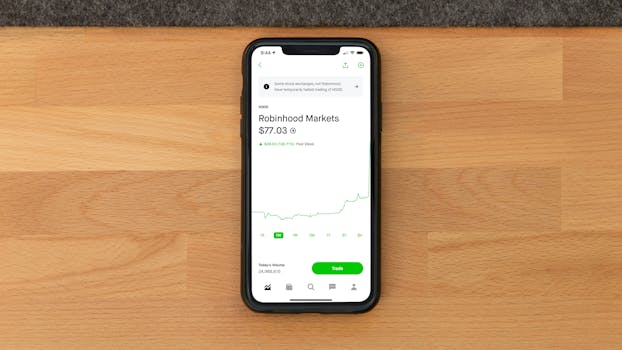 Photo by Andrew Neel on Pexels
What Is Robinhood, Really?
Robinhood is a stock and options broker founded in 2013 that basically blew up the industry by offering commission-free trading. Before them, you'd pay $5-10 per trade. Now? That's standard everywhere.
But here's the thing—being first doesn't mean you're still the best. The company went public in 2023 (under ticker HOOD, naturally), and they've matured beyond the scrappy startup phase. They're still investing in their platform, but they're also trying to make money through other channels like margin interest and premium features.
The company serves roughly 23 million users as of 2026. That's not tiny. It's also noteworthy that they've survived multiple controversies—the GameStop trading restrictions in 2021, crypto drama, various SEC issues. They're still standing. That matters for your account safety.
Turn $100/month into $100,000+. 8-chapter investing guide with 4 interactive calculators and real dollar examples.
Key Features of Robinhood
Stock Trading (Commission-Free)
You can buy stocks for literally $0 commission. Revolutionary in 2013, now it's normal everywhere. But Robinhood still executes trades well with no hidden fees lurking in the fine print.
What's actually useful here? Fractional shares. You don't need $500 to own one share of an expensive stock—throw in $5 and you're good. This dramatically lowers the barrier to entry for portfolio diversification.
Real talk: The execution speed is fine for casual traders but isn't built for high-frequency trading. If you're day trading seriously, you'll need margin, and Robinhood's margin rates are... honestly, mediocre.
Options Trading
Yeah, they offer options trading. You can trade calls and puts across all major expiration dates. The interface is intuitive compared to competitors like Interactive Brokers (which looks like it was designed in 2003, no joke).
The platform shows probability of profit, Greeks, and payoff diagrams—genuinely useful stuff. But if you're serious about options analysis, the research tooling is thin.
Note: You need approval for options trading. Level 1 approval is quick; higher levels take longer.
Robinhood Gold (Premium Subscription)
This is their $5/month (or $55/year, which saves you five bucks) add-on. Here's what you get:
- Extended trading hours (4 AM – 8 PM ET)
- Margin borrowing at 6.5% APR (decent, not spectacular)
- Advanced research tools (limited, but better than the free tier)
Is it worth it? Only if you're actually trading during extended hours. Most retail traders aren't. The margin rate is okay but not best-in-class.
Crypto Trading
Robinhood lets you buy Bitcoin, Ethereum, and 30+ other cryptocurrencies with no transaction fees. The spreads are wider than dedicated crypto exchanges, but there's no hidden markup listed.
Hot take: Their crypto offering exists, but it's not a reason to choose Robinhood over someone else. If you're serious about crypto, use Kraken or Coinbase instead. (Fun fact: you can't even withdraw your coins to a personal wallet on Robinhood—another reason to look elsewhere if crypto is important to you.)
IRAs and Retirement Accounts
They offer Traditional, Roth, and SEP IRAs. No account minimum. No custodian fees. Straightforward setup with no surprises.
Is this where they shine? Not really. Fidelity and Schwab blow them away on retirement account features. But for pure simplicity? It works fine.
Mobile App
The Robinhood app is genuinely good. Clean interface, fast navigation, real-time quotes, and a news feed that's... acceptable. It doesn't overwhelm you with information like some competitors (which is actually refreshing).
One-handed trading is possible. Charts are readable but basic. You won't mistake it for TradingView, but it's not supposed to be.
Robinhood Learn
They've got educational content—articles, investing tips, that sort of thing. It's fine. Not comprehensive, but solid for absolute beginners. Don't expect deep dives into technical analysis or options strategy though.
Pricing Breakdown
Free Tier (Robinhood Basic)
- $0 account minimum
- Commission-free stock trades
- Commission-free options trades
- Commission-free crypto trading
- Basic research tools
- Standard trading hours (9:30 AM – 4 PM ET)
That's it. That's actually all included. No surprise fees, no data charges, no hidden minimums.
Robinhood Gold (Premium)
Cost: $5/month or $55/year
What you get:
- Extended trading (4 AM – 8 PM ET)
- Margin borrowing (6.5% APR on balances up to $1,000; 5% above that)
- Advanced research tools
- Increased buying power through margin
Honest assessment: Most people don't need this. If you're trading five times a week with $2,000+, maybe consider it. Otherwise, skip it and save the $60/year.
Compare to Competition
| Feature | Robinhood | Webull | Interactive Brokers | Fidelity |
|---|---|---|---|---|
| Stock Commission | Free | Free | $0 | $0 |
| Options Commission | Free | Free | Free | Free |
| Crypto Available | Yes (30+) | Yes (100+) | No | Limited |
| Account Minimum | $0 | $0 | $0 | $0 |
| Extended Hours | Paid ($5/mo) | Free | Yes | Yes |
| Research Tools | Basic | Moderate | Excellent | Very Good |
| Mobile App Quality | Excellent | Good | Poor | Good |
Reality: You're not paying much difference between these brokers price-wise. The choice comes down to features and user experience, not cost.
Robinhood Pros (The Real Advantages)
1. Genuinely Zero Friction to Start
No account minimum, no monthly fees, no inactivity penalties. You can open an account, fund it with $10, and start buying stocks within hours. Try that with most traditional brokers and you'll hit a wall.
2. Mobile App Is Legitimately Excellent
This isn't hype. The app is clean, responsive, and actually enjoyable to use. You can manage your entire portfolio from your phone without getting frustrated.
3. Fractional Shares
Want to own $15 worth of Tesla? Done. This matters for beginners building diversified portfolios without $100K+ to deploy. Honestly, I think fractional shares should've been standard practice decades ago.
4. Extended Trading Hours (If You Pay)
4 AM – 8 PM ET is actually useful if you're trading around earnings releases or international news. It's not available on all stocks, but it's there.
5. Intuitive Options Trading
The options interface is straightforward. You'll see probability of profit and greeks displayed clearly. Doesn't require a finance degree to understand what you're looking at.
6. Multi-asset Class in One App
Stocks, options, crypto, IRAs. Everything in one place. Some people love consolidation; others find it limiting.
7. No Margin Interest for Basic Investing
Unlike some brokers who charge margin interest immediately, Robinhood doesn't charge margin fees on the free tier. You can keep a cash account and avoid all that.
 Photo by cottonbro studio on Pexels
Robinhood Cons (The Actual Problems)
1. Research Tools Are Genuinely Weak
There's no screener worth using. No access to analyst ratings. Charts are basic. If you're comparing earnings, you're Googling it separately. This is where Robinhood really falls short versus Webull or Interactive Brokers.
2. Recurring Technical Issues
Robinhood's infrastructure has stability problems. Most days are fine, but when market volatility spikes (March 2020, January 2021, August 2024), the app sometimes slows down or shows delayed quotes. It's happened consistently enough that it's worth knowing about.
3. Desktop Platform Is Neglected
The web version exists but feels like an afterthought. Responsive design, sure. But it's missing features from the mobile app. Serious traders end up using their phone anyway, which is... weird.
4. Limited Education
Their learning materials are thin. You'll outgrow their resources fast if you're a beginner. You'll be Googling independently or paying for courses elsewhere.
5. Customer Service Is Slow
Support is available, but response times can hit 24-48 hours. For trading platforms, that's not great. You want answers now, not tomorrow. Chat is available but not always responsive.
6. Pattern Day Trading Rules
If you're below $25K, you get limited day trades (3 in 5 days). This is SEC law, not Robinhood's fault, but it's a real limitation for active traders without significant capital.
7. Crypto Spreads Are Wide
While there's no commission on crypto, the spreads are wider than Kraken. You're paying the difference in the buy/sell price, just not realizing it as a line item.
Who Is Robinhood Best For?
Beginner Investors
You've got $500-2,000 saved up, want to learn the market, don't want to pay commissions. Robinhood gets out of your way. The app won't confuse you.
Casual Traders (1-5 trades per week)
You're not day trading. You're picking stocks you believe in, holding them, maybe selling a loser. No research complexity needed. Robinhood works perfectly.
Mobile-First People
If you never use desktop, you'll love Robinhood. The app experience beats competitors. You'll trade more on your phone, and that's actually fine.
Fractional Share Investors
You like the idea of dollar-based investing ($10 here, $20 there). Robinhood does this elegantly.
Multi-asset Traders
You want stocks and crypto in one place without jumping between apps. Robinhood consolidates it reasonably well.
Crypto-Curious People
Buying crypto on Robinhood is easier than explaining it to your friend. You're not getting the best rates, but it's accessible.
Who Should Look Elsewhere?
Serious Options Traders
If you're running multiple-leg spreads or analyzing Greeks deeply, Robinhood's analysis tools are insufficient. Go to Interactive Brokers or ThinkorSwim (Charles Schwab).
Day Traders with Significant Capital
You need margin, extended research, and stable infrastructure under stress. Robinhood can't promise that. Try Webull or Interactive Brokers instead.
Active Researchers
You want screeners, fundamental analysis, analyst ratings, earnings calendars. Robinhood doesn't have these. Webull has better tools; Fidelity has excellent tools.
Swing Traders Needing Advanced Charts
You need advanced charting and technical indicators. Robinhood's charts are basic. TradingView is separate (free), but you're managing two platforms.
People Requiring Reliable Customer Service
When you have questions, you need answers quickly. Robinhood's support is understaffed. Schwab and Fidelity respond faster.
Margin Traders
Robinhood's margin rates are okay at 6.5%, but Interactive Brokers charges 1-2% for larger accounts. The difference compounds over time.
Robinhood vs. Alternatives (2026)
Robinhood vs. Webull
| Aspect | Robinhood | Webull |
|---|---|---|
| Mobile App | 9/10 | 8/10 |
| Research Tools | 5/10 | 7/10 |
| Extended Hours | Paid | Free |
| Crypto Options | 30+ | 100+ |
| Customer Support | Slow | Better |
| Best For | Simplicity | Balanced trader |
Verdict: Webull is the better all-around choice if you want slightly more research without extra complexity. Robinhood wins on pure simplicity.
Robinhood vs. Interactive Brokers
| Aspect | Robinhood | Interactive Brokers |
|---|---|---|
| Ease of Use | 9/10 | 5/10 |
| Research Tools | 5/10 | 10/10 |
| Charting | Basic | Professional |
| API Access | No | Yes |
| Best For | Beginners | Serious traders |
Verdict: If you're serious about trading, Interactive Brokers is worth the learning curve. If you're just starting, stick with Robinhood.
Robinhood vs. Fidelity
| Aspect | Robinhood | Fidelity |
|---|---|---|
| Account Minimum | $0 | $0 |
| Mobile Experience | Better | Good |
| Research Quality | Weak | Excellent |
| Retirement Accounts | Basic | Comprehensive |
| Best For | Young traders | All-around investors |
Verdict: Fidelity is safer if you're serious about investing long-term. Robinhood is better if you're young and want simplicity without friction.
The Verdict: Is Robinhood Worth It in 2026?
Overall Rating: 7.5/10
Robinhood is still solid. They haven't rested on their laurels entirely—they've made actual improvements over the past few years (better stability, more cryptocurrencies, extended hours).
But here's my honest take: Robinhood is best for a specific person—someone with $500-$10,000, genuinely interested in learning to trade, willing to use mobile-first, and not requiring advanced research tools.
If you fit that description? Get Robinhood is genuinely a good choice. No fees, clean interface, quick setup with no headaches.
If you're more experienced? Webull gives you more without extra complexity. If you're serious about trading? Interactive Brokers is non-negotiable.
My personal recommendation: Start with Robinhood. It's free to open an account. Use it for 3-6 months. If you find yourself wanting better research tools or hitting the limits of what the app offers, switch to Webull or Get Webull. You can always transfer your stocks later—it's easy.
The platform matured enough to be reliable for most traders. The outages that plagued 2020-2021 happen less often now. That said, don't expect a Ferrari. You're getting a reliable Honda Civic. That's not an insult—it's practical.
You Might Also Like
- Robinhood vs Charles Schwab for Beginner Investors 2026: Complete Comparison
- Wrike Pros and Cons 2026: Honest Review From Someone Who Actually Uses It
- Robinhood vs M1 Finance 2026: Honest Comparison for Real Investors
- Robinhood vs Fidelity for Beginners 2026: Which Broker Actually Wins?
- Robinhood Review 2026: Is It Still Worth Using After All the Drama?
FAQ: Robinhood Questions Answered
Is Robinhood safe? Will they go out of business?
Robinhood is SIPC-insured up to $500K per account type. They're a public company (HOOD), heavily regulated. Your cash and securities are protected. You're fine.
Can I day trade with Robinhood?
Yes, if you have $25K+ (SEC rule, not Robinhood's). Below that, you're limited to 3 day trades per 5 trading days. This applies to all brokers.
Is Robinhood good for retirement accounts?
They offer Traditional and Roth IRAs with no fees. They're fine for basic retirement investing. If you want comprehensive retirement planning tools, Fidelity or Schwab are better options.
How long does it take to fund my account?
Instant for ACH transfers, usually settle in 1-2 business days. You can trade immediately with unsettled funds up to the deposit amount, but selling before settlement can trigger complications.
Can I transfer my stocks out of Robinhood?
Yes—ACATS transfer to another broker takes 3-7 business days with no fees. Robinhood might drag their feet slightly (they've had complaints), but it's always possible.
Is Robinhood's crypto real crypto or just trading?
You own the actual coins stored in Robinhood's custody. You can't withdraw them to a personal wallet—that's a real limitation. So you can't use Robinhood crypto for anything outside their platform.
How does Robinhood make money if trading is free?
Margin interest, premium subscription fees, and payment for order flow (selling your order data to market makers). It's not shady, just how they've structured their business model.
Final Take: Robinhood works. It's not the best for everyone, but for someone starting with modest capital and wanting a friction-free entry into stock trading? They're still a solid choice in 2026. Just know what you're getting: simplicity and speed, not advanced features.