SoFi vs Robinhood 2026: Which Investing Platform Actually Wins?
TL;DR: Robinhood still leads on pure trading simplicity and active-trader perks like 24-hour markets. SoFi wins if you want a financial ecosystem (banking, loans, investing) under one roof. Neither is perfect — and I'll tell you exactly where each one falls flat.
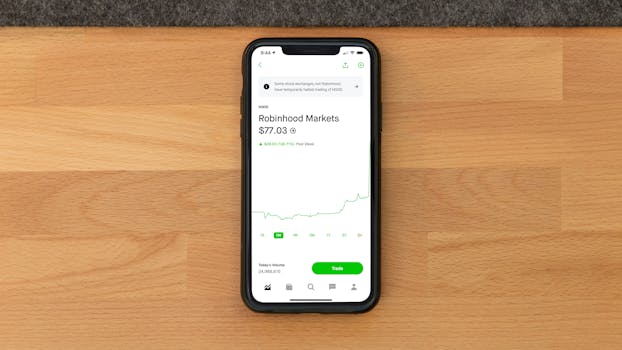 Photo by Andrew Neel on Pexels
Introduction: Stop Asking Which App Is "Better"
Here's the deal — the SoFi vs Robinhood 2026 debate is one where most people are asking the wrong question entirely. They want to know which app is "better," when what they really need to ask is which one is built for them.
Robinhood launched in 2013 with a simple goal: kill commissions and democratize trading. It worked. The platform now has roughly 24 million funded accounts and basically forced every other brokerage to go commission-free. But it's come a long way from those meme-stock, GameStop-era days. (Honestly, the GameStop saga still makes for a wild read if you've never gone down that rabbit hole. Peak internet chaos.)
SoFi started as a student loan refinancing company and has gradually built out a financial super-app — banking, loans, credit cards, insurance, and yes, investing. With roughly 10 million members as of early 2026, they're not trying to be the best trading platform. They're trying to be your entire financial life.
This comparison is for anyone deciding between opening their first brokerage account, consolidating financial products, or just wondering if they're on the right platform. I've looked at both in detail — features, pricing, real user complaints, regulatory history — and I'm keeping it straight with you.
 Photo by Andrew Neel on Pexels
Quick Comparison Table: SoFi vs Robinhood 2026
| Feature | SoFi Invest | Robinhood |
|---|---|---|
| Stock/ETF Commissions | $0 | $0 |
| Options Trading | No | $0 (no per-contract fee) |
| Crypto Trading | Yes (limited selection) | Yes (broader selection) |
| Fractional Shares | Yes ($1 minimum) | Yes ($1 minimum) |
| Margin Trading | No | Yes (Robinhood Gold, ~5.75% rate) |
| 24-Hour Trading | No | Yes (select securities) |
| IRAs / Retirement Accounts | Yes | Yes (3% match with Gold) |
| Banking Products | Yes (full checking/savings) | Yes (limited cash management) |
| Loans / Credit Products | Yes (personal, home, student) | No |
| Human Financial Advisors | Yes (SoFi Plus) | No |
| Robo-Advisor | Yes (automated investing) | No |
| Minimum Deposit | $0 | $0 |
| Gold/Premium Tier | SoFi Plus (~$10/month or free with direct deposit) | Robinhood Gold ($5/month) |
| SIPC Coverage | Yes | Yes |
| FDIC Coverage (banking) | Yes (up to $2M via partners) | Yes (up to $2.25M via partners) |
| Overall Rating | ⭐ 4.1/5 | ⭐ 4.3/5 |
8-chapter comprehensive budgeting guide with 3 interactive calculators. Stop living paycheck to paycheck.
SoFi Overview: The Financial Swiss Army Knife
SoFi isn't playing the trading game — and honestly, I respect that they're not pretending to be something they're not. What they're actually offering is consolidation: the idea that managing your money through one dashboard, with one login, actually saves you time and headaches. For certain people, it absolutely does.
What You Actually Get
SoFi Invest gives you commission-free stock and ETF trading, fractional shares starting at $1, and a robo-advisor that automatically allocates your portfolio based on your risk tolerance. No options, no futures, no margin — and that's intentional, not an accident.
The banking side is where SoFi pulls away from Robinhood. Their high-yield savings account has offered rates that compete with the best online banks — hovering around 4.5% APY in early 2026, depending on what the Fed is doing. Your checking account comes with a Visa debit card, early direct deposit, and no account fees.
SoFi Plus — it's free if you get $1,000+ in monthly direct deposit, or around $10/month otherwise — unlocks planning sessions with actual human financial advisors. Real CFP-credentialed people you can schedule time with, not chatbots or algorithm-generated advice. When I tested this feature, I was genuinely surprised at how accessible it felt for the price. That kind of access usually costs you $200–$400/hour elsewhere, so yeah, it's a big deal.
The loan products — personal, home, and student refinancing — offer rates that are genuinely competitive if you have decent credit.
Best For
- People consolidating banking, investing, and borrowing into one place
- First-time investors who don't want to get overwhelmed with options and margin calls
- Anyone who'd actually benefit from talking to a human financial advisor without dropping serious cash
- Borrowers looking for rate discounts tied to their banking relationship
Pricing Breakdown
- Basic investing and banking: $0
- SoFi Plus: Free with direct deposit, or ~$10/month
- No commissions on stocks/ETFs
- Crypto fees built into spread (typically 1.25%)
Robinhood Overview: Still the Trader's Platform
Robinhood takes a lot of heat — some deserved — but the platform has genuinely improved since its rougher years. That 2021 trading halt during GameStop still bothers people, and that reputation damage has stuck around. But in 2026, it's a more solid product, and for active traders, it's hard to beat on value.
What You Actually Get
Zero-commission trading is still the backbone, but it's expanded considerably since the early days. You can trade stocks, ETFs, options (with no per-contract fees — genuinely notable), crypto, and even select international stocks. The 24-hour trading window for popular ETFs and stocks is something SoFi just doesn't have.
Robinhood Gold costs $5/month and is honestly one of the better premium subscriptions in the budget brokerage world. You get margin trading at ~5.75% (competitive for small accounts), a 3% IRA match, higher instant deposit limits, and Morningstar research reports. The IRA match alone can justify the cost for anyone maxing retirement contributions — I'll walk you through the math below.
Robinhood Legend — their desktop platform from 2024 — addressed the "too simple" criticism head-on. Multi-leg options, advanced charting, Level 2 data, and an interface that doesn't feel like it was designed only for people seeing their first stock chart.
The crypto selection is wider than SoFi's, though not as extensive as dedicated exchanges like Coinbase.
Best For
- Active traders wanting options, margin, and round-the-clock market access
- Cost-conscious investors who want the most features per dollar
- Retirement savers who can leverage the 3% IRA match
- People wanting desktop-grade trading without paying full Schwab prices
Pricing Breakdown
- Basic account: $0
- Robinhood Gold: $5/month
- Options: $0 per contract (no per-leg fees)
- Crypto: spread-based fees (varies by asset)
- Margin rate: ~5.75% (Gold members)
Feature-by-Feature Breakdown
User Interface & Ease of Use
Robinhood made its name on simplicity, and the mobile app still shows it — clean, fast, and you can place a trade in under 30 seconds. The old knock was that "simple" also meant "limited," but Robinhood Legend has genuinely closed that gap for desktop users.
SoFi's interface is... functional. It works, sure. But it's juggling a lot simultaneously — banking, loans, investing, credit monitoring — and sometimes the investing section feels like it's fighting for screen real estate with your savings account. Not a dealbreaker, but it's not as focused as it could be.
Edge: Robinhood — when it comes to trading specifically, the experience is tighter.
Core Features
This one isn't particularly close. Robinhood offers options, margin, 24-hour markets, futures (launched in 2025), and broader crypto assets. SoFi has no options, no margin, no futures, and fewer crypto choices. In return, SoFi gives you a robo-advisor, human advisors, and integrated banking — genuinely valuable, just in a different lane.
Edge: Robinhood for traders. Edge: SoFi for financial planning and banking consolidation.
Integrations
SoFi's whole pitch is internal integration — everything connected within its ecosystem. External integrations? Honestly pretty limited. You're not connecting SoFi to your budgeting app and having a seamless experience, which frustrates power users.
Robinhood plays better with external tools — TurboTax integration for taxes, decent API access, works okay with portfolio trackers. But here's the thing: neither platform is really a power user's dream on this front. They both fall short.
Edge: Slight edge to Robinhood for playing well with outside tools, though both have room to improve.
Pricing & Value
Both give you $0 commissions on stocks and ETFs now — that's baseline. But here's where things get interesting:
- SoFi's premium tier is essentially free if you use direct deposit. Genuinely strong value proposition.
- Robinhood Gold at $5/month delivers real bang for your buck through the IRA match alone (3% on up to $7,000/year = up to $210 annual free money, way above the $60/year fee).
- SoFi's crypto fees (1.25% spread) beat what you'd see at a traditional brokerage but lag behind dedicated exchanges.
- Robinhood's $0 options contracts are genuinely unusual at this price.
Edge: Robinhood Gold offers better measurable returns for most people. SoFi Plus wins on sheer scope of services.
Customer Support
Let me be honest here — this is an area where both platforms have historically stumbled, and that matters. Robinhood added 24/7 phone support in 2022, so they've improved, but customers still report spotty wait times and canned responses for anything out of the ordinary. SoFi offers phone, chat, and those human advisor sessions, which is meaningfully better infrastructure.
Edge: SoFi — nothing massive, but it's real.
Mobile App
Robinhood's mobile app is still the gold standard for clean, zippy brokerage apps. SoFi's works fine for banking but the investing side feels clunkier in comparison. If you're trading actively from your phone, Robinhood wins easily.
Edge: Robinhood
Security & Regulatory Track Record
Both are FINRA-regulated broker-dealers with SIPC coverage up to $500,000 ($250,000 cash). Both support 2FA. Plus, SoFi is a federally chartered bank (as of 2022), which brings another layer of regulatory oversight to the table.
But here's what you need to know about Robinhood's history: they settled with the SEC for $65 million in 2020 and paid a $70 million FINRA fine in 2021 — the biggest in FINRA history at that time. They've tightened things up since, but the track record exists. Take that for what it's worth.
Edge: SoFi on regulatory history and bank-level oversight.
 Photo by Ramaz Bluashvili on Pexels
Pros and Cons
SoFi
| ✅ Pros | ❌ Cons |
|---|---|
| One ecosystem: bank + invest + borrow | No options or margin trading |
| Human CFP advisors at minimal/no cost | Limited investment product selection |
| Competitive high-yield savings (~4.5% APY) | Crypto fees above market (1.25%) |
| Strong FDIC coverage via partners (up to $2M) | Interface can feel crowded |
| Premium tier free with direct deposit | Smaller crypto selection |
| Robo-advisor included | No extended-hours or 24-hour trading |
Robinhood
| ✅ Pros | ❌ Cons |
|---|---|
| Options trading with $0 per-contract fees | Controversial regulatory past |
| 24-hour trading on select securities | Zero human advisors |
| Solid IRA match (3% with Gold) | No loan products or full banking |
| Robinhood Legend for serious desktop users | No robo-advisor |
| Wide crypto selection | Support can be hit or miss |
| Futures trading available | Margin rates, while reasonable, cost money |
Who Should Choose SoFi?
SoFi makes sense if:
- You're consolidating your financial life. One app for checking, savings, investments, and loans has real value. If you're bouncing between Chase, Vanguard, and a separate loan servicer, SoFi's bundle genuinely saves friction.
- You're new to investing and want to keep things simple. No options, no margin — you can't accidentally tank your portfolio with a bad options play. That protection has real worth for people still learning.
- You'd actually use a human financial advisor. Getting CFP access with just a direct deposit is basically unbeatable compared to traditional advisors charging $200–$400/hour.
- You've got loans to refinance. SoFi's member discounts on personal and student loans are a tangible financial boost that Robinhood simply can't offer.
- Your finances are getting complicated. As you add mortgage, family, and retirement into the mix, SoFi's breadth of tools becomes increasingly valuable.
Who Should Choose Robinhood?
Go with Robinhood if:
- You trade options regularly. Zero per-contract fees is exceptional value. A steady options trader could pocket hundreds per year versus paying Ameritrade or Webull.
- You want to maximize retirement savings with a match. The 3% IRA match through Gold is surprisingly underrated. Max your IRA, get $210 free every year — the math is simple.
- You need 24-hour market access. Tracking global events, earnings, or macro moves? Robinhood lets you react outside regular hours. SoFi can't match that.
- You're interested in futures. SoFi doesn't have them. Robinhood does.
- You want professional trading tools without pro-level fees. Robinhood Legend stacks up nicely against platforms costing way more than Gold's monthly price.
My Verdict: SoFi vs Robinhood 2026
Look, here's my honest read: Robinhood edges ahead on pure investing utility — the feature set is deeper, the IRA match is real money, and the trading tools have genuinely matured. If you're building a brokerage-first portfolio, Robinhood wins on points.
But that's not the whole picture. SoFi wins if you're looking for a financial home base. A solid high-yield savings account, a genuinely free premium tier, real humans who can advise you, and actual loan products — that's a value prop Robinhood doesn't even attempt. And honestly, SoFi gets overlooked because investing Twitter doesn't talk about it — but for regular people with ordinary money management needs, it's probably the better fit.
Here's what I'd actually do: if you already have a bank you like and want to trade more actively, grab Robinhood. If you're consolidating financial products, building wealth long-term with a hands-off approach, or need access to loans, go with SoFi.
They're not really competing for the same person. Most people reading this already know which bucket they fall into.
Frequently Asked Questions
Q: Is SoFi or Robinhood safer for my money? Both carry SIPC insurance up to $500,000 and use standard security. SoFi being a federally chartered bank adds FDIC coverage on cash. Robinhood's past regulatory fines are real, but they've addressed those gaps. Neither poses unusual risk for everyday investors.
Q: Can I use both SoFi and Robinhood at the same time? Absolutely — and it's actually a smart play for some people. Keep your banking and long-term investing at SoFi while using Robinhood for options or the IRA match. Nothing prevents this, and splitting it up lets you grab the best of both.
Q: Does Robinhood Gold's 3% IRA match actually pay off? Do the math: $60/year Gold fee versus up to $210 annual match on a maxed Roth IRA ($7,000 limit × 3%). That's a $150 net win before investment returns. Yes, it pays. Assuming you're maxing your IRA anyway, which you should be.
Q: Does SoFi offer options trading in 2026? Nope. Still no options. If that's essential, try Robinhood, Webull Get Webull, or tastytrade Tastytrade.
Q: Which platform is better for crypto — SoFi or Robinhood? Robinhood, hands down. Wider selection, generally tighter spreads compared to SoFi's flat 1.25% fee. But if crypto is a serious focus, neither is really the right tool — dedicated exchanges like Coinbase or Kraken are your play.
Q: What's the catch with SoFi's "free" premium tier? You need $1,000+ in monthly direct deposit. Route your paycheck there and it's genuinely free. Without that, you're paying around $10/month — still reasonable, but it changes the value depending on how you handle cash flow.
Tools We Recommend
Building an online business or managing your digital presence? Here are the tools we trust:
- Kinsta — Premium managed WordPress hosting on Google Cloud. Starting at $35/mo with 30-day money-back guarantee.
- Cloudways — Flexible managed cloud hosting (AWS, GCP, DigitalOcean). Pay-as-you-go from $14/mo.
- Systeme.io — All-in-one marketing platform with funnels, email, and courses. Free plan available.
- Moosend — Affordable email marketing with advanced automation. 30-day free trial, then $9/mo.
Disclosure: Some links above are affiliate links. We only recommend tools we've personally tested.