Robinhood vs Webull for Day Trading 2026: Which Broker Actually Wins?
Sarah started her day trading journey three years ago with Robinhood. The app was slick, the zero-commission promise was intoxicating, and depositing $500 felt like enough to change her life. Eight months later, she'd blown through three accounts trying to chase winners on options. Then she switched to Webull after a friend mentioned the extended hours trading and actual charting tools. Within two weeks, she realized what she'd been missing wasn't just features—it was the entire infrastructure that separates hobby traders from people who actually know what they're doing.
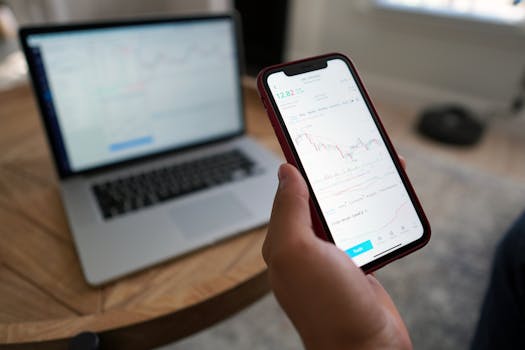 Photo by Joshua Mayo on Pexels
Here's the deal: this comparison is for people like Sarah. Whether you're looking at your first brokerage or switching after months of frustration, you need honest information about what Robinhood and Webull actually offer for day trading in 2026. Spoiler alert: they're not interchangeable, even though both advertise zero commissions.
Quick Comparison Table
| Feature | Robinhood | Webull |
|---|---|---|
| Commission | $0 stocks, crypto | $0 stocks, options, crypto |
| Account Minimum | None | $2,000 (margin) |
| Pre-Market Hours | 9:00 AM - 4:00 PM ET only | 4:00 AM - 9:30 AM ET |
| After-Hours Trading | 4:00 PM - 8:00 PM ET | 4:00 PM - 8:00 PM ET |
| Options Trading | Yes (basic) | Yes (advanced spreads available) |
| Charting Tools | Basic | Advanced (ThinkorSwim-style) |
| Paper Trading | No | Yes (live) |
| Account Types | Cash, Margin | Cash, Margin, IRA, ROTH |
| Mobile App Rating | 4.3/5 (iOS) | 4.5/5 (iOS) |
| Customer Support | Email/in-app | Chat, email, phone |
| Crypto Trading | ~150 cryptocurrencies | ~150 cryptocurrencies |
| Regulatory Status | FINRA, SIPC | FINRA, SIPC, NYSE |
| Best For | Casual traders, beginners | Day traders, technical analysts |
 Photo by Tima Miroshnichenko on Pexels
Robinhood Overview: The App That Started the Revolution
Robinhood hit the market in 2013 with a simple mission: kill the commission. And it worked. By 2020, every other broker was scrambling to match their zero-commission pricing. If you haven't used Robinhood yet, here's what you're getting into.
What Robinhood Does Well
The mobile app is genuinely beautiful. I'm not exaggerating—it's probably the best-designed trading app on the market. Opening positions takes three taps. Your portfolio shows in clean cards. News feeds are curated and readable instead of overwhelming you with 500 alerts a day. Look, if you're learning to trade and want something that doesn't feel intimidating, Robinhood absolutely nails this part.
They also give you instant deposits up to $1,000 if you're a new user, which sounds trivial until you're staring at a buying opportunity with cash stuck in pending limbo. Extended hours trading exists (4 PM - 8 PM after market close), though not pre-market—and that matters if you're trading earnings gaps.
Options trading works, and they've streamlined the approval process. You can get level 1 (covered calls only) approval in minutes. Higher levels take a bit longer, but nowhere near as painful as some brokers that demand phone interviews just to trade a put spread.
Robinhood's Pricing Structure
Here's what's not shown in big letters: Robinhood makes money from payment for order flow (PFOF). Basically, they sell your order data to market makers. Is this a dealbreaker? Not necessarily—most brokers do this now. But it's worth knowing you're not a customer; you're the product.
Commission fees: $0 stocks, ETFs, options, and crypto. No hidden fees for deposits. No inactivity fees. This is genuinely straightforward, and I appreciate that they're not sneaky about it.
Robinhood Gold (premium tier) is $5/month and gives you 2x margin buying power and after-hours trading alerts. Honestly, for most day traders, this won't change your life, but it exists if you want it.
Regulatory Compliance
Robinhood's had regulatory headaches (2020 options approval scandal, 2021 Citadel payment drama). They've cleaned up since then and remain FINRA-registered and SIPC-insured. Account balances are protected up to $500,000 ($250,000 per account type). This is standard stuff across the industry.
8-chapter comprehensive budgeting guide with 3 interactive calculators. Stop living paycheck to paycheck.
Webull Overview: The Trader's Toolbox
Webull launched in 2017 with a different philosophy: give traders everything they need, not just a pretty app. The platform's built for people who actually know what they're doing. Fun fact: Webull's parent company is Fumi Technologies, based in China, which some traders find concerning for privacy reasons—though the actual trading operations are US-regulated.
What Webull Does Well
Their charting is legitimate. I'm not being hyperbolic—if you've used ThinkorSwim, Webull's charts feel familiar. You get customizable indicators, drawing tools, volume profiles, and heatmaps. For day traders analyzing multiple timeframes simultaneously, this matters enormously. Robinhood's charts are... okay. Webull's charts are what you actually need.
Pre-market trading starts at 4 AM ET. This is huge for catching Asia-influenced moves or earnings reactions. Robinhood doesn't offer pre-market at all, which is honestly a massive oversight.
Paper trading exists with live-market data. You test strategies for free without risking capital. Robinhood doesn't have this feature at all.
Options trading supports spreads (puts, calls, combinations). You're not limited to covered calls on level 1. This matters if you're doing iron condors or calendar spreads as part of your strategy.
And here's something people don't talk about enough: Webull has a $2,000 minimum for margin accounts, which actually protects you. Day trading requires being above the PDT minimum ($25,000 for margin accounts under SEC rules), and Webull enforces this. Robinhood lets you trade with $500 on margin, which is... irresponsible, to be honest. Not their fault legally, but it enables the exact kind of overleveraged behavior that blows up accounts.
Webull's Pricing Structure
Webull also uses PFOF, so the execution story is similar to Robinhood. But they're transparent about it, which I respect.
Commission: $0 stocks, ETFs, options, and crypto. Same as Robinhood. No differences here.
No subscription tier required. Everything's included. No artificial walls or upsells. What you see is what you get, and there's no hidden premium version.
Regulatory Compliance
Webull's registered with FINRA, operates under SEC oversight, and carries SIPC insurance. They're also listed on the NYSE, which adds another layer of legitimacy. This is more about Webull's parent company than specific trader protection, but it's still a positive signal.
Feature-by-Feature Comparison
User Interface & Ease of Use
Robinhood wins on first impression. The app opens, shows your portfolio in a beautiful graph, and makes you feel like a professional immediately. It's almost too polished for what it does.
But—and this is important—Robinhood's simplicity becomes a liability after your first 100 trades. You'll want customization. You'll want to see bid-ask spreads in real-time without digging through menus. You'll want order types beyond basic limit orders. That's when you realize you're using training wheels on a professional platform.
Webull's steeper learning curve is real. The first time you open it, you'll be confused about where everything lives. The interface isn't as intuitive. But after two weeks of actually using it, you'll be faster on Webull than you'd ever be on Robinhood. All the tools are accessible, and power users will appreciate not having their options buried six menus deep.
Winner: Robinhood for beginners, Webull for serious traders.
Core Features for Day Trading
Here's where things diverge significantly.
Robinhood:
- Basic charting (1, 5, 15, 60-minute, daily)
- Real-time quotes (actually real-time, which is good)
- Screener exists but it's pretty basic
- Alerts work but have limited customization
Webull:
- Advanced charting with 50+ indicators
- Multiple timeframe analysis on one screen
- Stock screener with 100+ filters
- Customizable alerts with multiple trigger types
- Level 2 quotes showing order book depth
- Heatmaps and sector rotation views
- Pre-market and after-hours trading (true extended hours)
For day trading, this isn't even a contest. Webull has what you actually need. Robinhood has what you wanted when you opened the app three minutes ago.
Winner: Webull (decisively).
Extended Hours Trading
Robinhood: After-market only (4 PM - 8 PM ET). No pre-market access.
Webull: Pre-market (4 AM - 9:30 AM ET) and after-market (4 PM - 8 PM ET).
Day traders care about gaps. Earnings reactions overnight. Asia market movements. Robinhood locks you out entirely. Webull lets you trade the moves that matter. This is honestly where Robinhood shows its limitations most clearly.
Winner: Webull.
Account Types & Flexibility
Robinhood: Cash and margin accounts. That's it. No retirement accounts (IRAs, Roths). Want to shield some gains with a Roth day trading account? Not happening.
Webull: Cash, margin, traditional IRA, Roth IRA. More flexibility for different goals.
This isn't critical for pure day traders, but it matters if you're building multiple strategies.
Winner: Webull.
Customer Support
Robinhood: Email and in-app messaging. Response times are typically 24-48 hours. If you have a problem mid-market, you're waiting until tomorrow.
Webull: Email, in-app chat, and phone support. Chat responses are usually within 15 minutes during market hours. They actually have humans answering phones.
Have you ever had a trade stuck in limbo? A margin call question that needed immediate clarity? Robinhood's support philosophy seems to be "we're too busy being cool to answer phones." Webull treats support like part of the product.
Winner: Webull.
Mobile App Experience
Both apps have solid mobile experiences. Robinhood's is more beautiful. Webull's is more functional.
Here's my honest take: Robinhood's app is better for browsing your portfolio five times a day because it's pleasant to look at. Webull's app is better for actually trading. You'll execute more efficiently. Charts load faster. Order execution feels snappier.
For day trading specifically, Webull's mobile app wins the head-to-head.
Winner: Webull (slight edge).
Security & Account Protection
Both brokers use two-factor authentication. Both encrypt data in transit. Both comply with SEC and FINRA standards. Robinhood's had some security scares (2021 API vulnerabilities). Webull's stayed quieter on the security front.
SIPC protection on both: up to $500,000 per account.
This is a draw. Neither is materially safer than the other.
Winner: Tie.
 Photo by George Morina on Pexels
Pros and Cons
Robinhood
Pros:
- Absolute beginner-friendly interface
- Beautiful mobile app
- Zero commissions across all asset classes
- Instant deposits up to $1,000
- Crypto trading integrated seamlessly
- Options approval is quick (sometimes too quick)
Cons:
- No pre-market trading
- Charts are too basic for serious analysis
- Limited order types (no conditional orders beyond simple limits)
- No paper trading or practice mode
- Support is slow (email-only during market hours)
- PFOF means your orders might get worse prices
- Doesn't enforce PDT rules, enabling reckless leverage
- No desktop platform (mobile-only)
Webull
Pros:
- Advanced charting tools built-in
- Pre-market trading (4 AM start)
- Paper trading with real data
- Multiple account types (IRA, Roth)
- Better customer support (chat, phone during market hours)
- Level 2 quotes and order book data
- Desktop platform available
- Supports options spreads and complex strategies
Cons:
- Steeper learning curve
- $2,000 minimum for margin accounts
- Less polished UI than Robinhood
- PFOF (like Robinhood, but they're transparent about it)
- Fewer cryptocurrencies supported than some competitors
- Account funding takes longer initially
Who Should Choose Robinhood?
Pick Robinhood if you're brand new to trading and want to learn the basics without feeling overwhelmed. The simplicity is actually a feature here—it prevents you from overthinking things.
You're a super casual trader who buys three stocks a year. You don't need charting tools or pre-market access because you're not actually day trading anyway. The app's beauty matters more to you than functionality.
You're primarily trading crypto and want a simple, beautiful app for it. Robinhood's crypto integration is genuinely smooth and user-friendly.
You want to invest without feeling like you need an MBA in finance. The interface is so approachable it actually helps people get comfortable with markets.
Honest note: If you're reading a day trading comparison article, Robinhood probably isn't your final answer. But if someone sent you here and you're newer to markets, Robinhood is genuinely great for learning the basics. Just know you'll eventually outgrow it.
Who Should Choose Webull?
Pick Webull if you're actively day trading or swing trading. You need the charting tools, extended hours, and real-time data. This is literally Webull's core audience, and it shows in the product.
You want to test strategies before risking real money. Paper trading with live data is invaluable for building confidence and finding what actually works before you trade live.
You're analyzing multiple timeframes or using technical indicators. Robinhood's charts literally can't support what you need to do.
You're catching pre-market gaps or earnings reactions. This is where serious money moves before 9:30 AM.
You trade options spreads or anything beyond covered calls. Webull supports the complexity; Robinhood doesn't.
You want support that responds during market hours. This matters when you have questions, not at 6 PM when the market's closed.
Real talk: Webull is for people serious enough about trading to spend two weeks learning a platform. If that describes you, Webull is substantially better.
Verdict: Which Broker Should You Choose?
This decision hinges on one thing: are you actually day trading, or do you think you want to?
If you're a genuine day trader, Webull is the clear winner. The charting alone justifies the switch. Pre-market access means catching moves that happen before most retail traders wake up. Paper trading lets you fail safely. Customer support exists when you need it. Yes, it takes longer to learn. But within a month, you'll execute trades faster and more profitably than you would on Robinhood.
The $2,000 minimum actually protects you, too. It prevents the scenario where someone deposits $500 and yolos it into 50x leveraged positions. Robinhood's "let them trade with nothing" approach is reckless, even if it sounds appealing.
If you're genuinely new and learning, start with Robinhood. The lower barrier and beautiful UI make it perfect for understanding how markets actually work. Deposit a few hundred dollars, make some trades, lose some money (everyone does), and figure out if you actually like this. Then migrate to Webull after three months if you're serious.
If you're somewhere in the middle—trading occasionally but not systematically—honestly? Use the one with the better-looking app. You're not going to benefit from Webull's advanced tools, and you don't need Robinhood's hand-holding. The difference is purely emotional preference, not performance.
Here's my personal hot take: Robinhood was genuinely revolutionary for democratizing commission-free trading. But that was six years ago. Every broker caught up. The industry moved on. Robinhood's standing still, betting that beautiful design beats functionality. It doesn't. Not for serious traders.
You Might Also Like
- Webull vs Robinhood for Active Traders 2026: Which Platform Delivers Better ROI?
- Robinhood Review 2026: Is It Still Worth Using After All the Drama?
- Webull vs Robinhood 2026: Which Commission-Free Broker Is Actually Better?
- Webull vs TD Ameritrade for Active Traders 2026: Honest Comparison
- Best Stock Trading Apps for College Students 2026: Our Top 5 Picks
FAQ: Robinhood vs Webull Day Trading
Can you day trade on Robinhood with less than $25,000?
Technically yes, but don't. The PDT rule requires $25,000 to avoid trading halts, and Robinhood doesn't enforce this as strictly. You'll rack up restrictions that make trading impossible. Webull's $2,000 minimum for margin is actually better—it forces you to respect PDT rules.
Which platform has better execution?
Both use PFOF, so execution quality is similar. You won't notice a difference unless you're scalping tick-by-tick (which retail traders shouldn't be doing). The real winner is whichever gives better tools to decide what to trade—that's Webull.
Can you use Level 2 quotes on Robinhood?
No. Robinhood doesn't offer Level 2 order book data at all. This is a significant limitation for day traders analyzing where buying and selling pressure actually exists. Webull provides it natively.
Is Webull paper trading realistic?
Yes. It uses real market data and real price movements, making it genuinely useful for testing strategies before risking real money.
Which platform is safer for my money?
Both are SIPC insured and FINRA regulated. Your money is equally safe on either platform. The real risk isn't the platform—it's you overleveraging and blowing up your account. Webull's enforced PDT rules actually protect you from yourself here.
What happens if I switch from Robinhood to Webull?
Account transfer is simple. Both support ACAT transfers (Automated Customer Account Transfer). Close your Robinhood account, start your Webull account, request the transfer, and it completes in 3-5 business days. You'll have a transition period where you can't trade, so plan accordingly.
The bottom line? Robinhood is a phenomenal app for people who aren't serious about day trading. Webull is the choice for people who are. Test both with a small deposit if you're unsure, but odds are you already know which one fits your style. Pro tip: if you're still on Robinhood after six months of active trading, you're making it harder on yourself than necessary.
Ready to commit to one? Start with Get Webull if you're trading actively, or Get Robinhood if you're learning. Either way, you'll get started without paying commissions. Now go make some profitable trades.