Robinhood vs SoFi for Beginner Stock Traders 2026: Which Broker Actually Wins?
You've got $500 burning a hole in your pocket and you're ready to buy your first stock. But here's the thing—which brokerage should you actually use? Robinhood and SoFi are probably the two names you keep hearing about on Reddit and TikTok. Both promise commission-free trading, fractional shares, and user-friendly apps. So what's the real difference, and more importantly—is one genuinely better for your money?
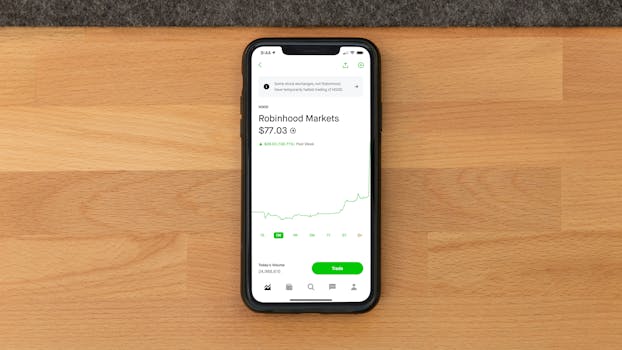 Photo by Andrew Neel on Pexels
I'm going to be straight with you: both platforms are legitimate, but they're built for completely different types of beginners. One's optimized for pure trading velocity. The other wraps investing into a broader financial ecosystem. Neither is universally "better"—it depends on what you actually want from a brokerage.
Let's cut through the marketing and figure out which one deserves your attention (and your cash).
Quick Comparison Table
| Feature | Robinhood | SoFi |
|---|---|---|
| Account Minimum | $0 | $0 |
| Commission | $0 | $0 |
| Fractional Shares | Yes (down to $1) | Yes (down to $1) |
| Stock Options | Yes | Yes |
| Crypto Trading | Yes (70+ coins) | Yes (15-20 coins) |
| Checking/Savings | No | Yes (up to 4.60% APY*) |
| Price-to-Trade Spread | Standard market spreads | Standard market spreads |
| Mobile App Rating | 4.2★ (iOS), 4.1★ (Android) | 4.5★ (iOS), 4.4★ (Android) |
| Customer Service | Chat-based, limited hours | Chat, email, phone support |
| Research Tools | Basic | Moderate |
| Dividend Reinvestment (DRIP) | Yes | Yes |
| IRA Accounts | Yes | Yes |
| Regulatory Issues (Recent) | Historical, but resolved | Cleaner record |
| Best For | Frequent traders, options players | All-in-one banking + investing |
*Rates as of March 2026; subject to change
 Photo by Tima Miroshnichenko on Pexels
Robinhood Overview: The Trading-First Approach
Robinhood became famous for one reason: it absolutely demolished commission fees. When it launched in 2013, brokers were still charging $5-10 per trade. That seems absurd now, but at the time? Genuinely revolutionary.
Here's what you get with Get Robinhood:
The Good Stuff
Zero commission on stocks, ETFs, options, and crypto. That's still the core promise, and it actually matters. You can trade as much as you want without worrying about fees eating into your positions. The app itself is genuinely beautiful—it's minimalist, fast, and doesn't overwhelm you with Bloomberg Terminal jargon that makes your eyes glaze over. Fractional shares starting at $1 mean you can own Tesla or Amazon without dropping $150+ on a single share. Options trading is available to qualified accounts, which matters if you want to get spicy with your portfolio.
Crypto integration is baked right in. You can own Bitcoin, Ethereum, Solana, and dozens of others directly from your Robinhood account. No separate login, no moving funds between platforms, no extra friction.
The Less-Good Stuff
Here's where I need to be real with you: Robinhood makes money from you in other ways. When you place a trade, Robinhood receives what's called "order flow payment" from market makers. In plain English? They're selling your order data to Wall Street firms. Is this shady? Not technically—it's legal and fully disclosed—but it does mean your execution might not be at the absolute best price available. It's a trade-off you should know about.
The research tools are sparse. There's no analyst reports, no earnings transcripts, nothing like that. If you're a beginner, you probably won't miss it. But honestly, it's worth knowing upfront.
Customer support is a legitimate sore spot. It's chat-only, available during limited hours, and slow—like, really slow. Try reaching someone on a Saturday at 2 PM and you're out of luck. That matters when your account is locked or something legitimately goes wrong.
Pricing
Completely free. No monthly fee, no per-trade fee, no account minimum. The only way Robinhood makes money from you is through order flow payments and (for Gold subscribers) a $5/month subscription that nets you margin and level 2 data—which most beginners absolutely don't need.
Turn $100/month into $100,000+. 8-chapter investing guide with 4 interactive calculators and real dollar examples.
SoFi Overview: The Financial Swiss Army Knife
SoFi stands for "Social Finance," and honestly, the company's positioning has evolved dramatically over the years. It's no longer just a brokerage—it's trying to be your entire financial operating system.
Here's what Join SoFi brings to the table:
The Good Stuff
The integrated banking is genuinely useful in a way that feels intentional. You get a checking account with no monthly fees, no minimum balance requirement, and—this is wild—up to 4.60% APY on your cash. That's basically investment-level returns for money you keep liquid. That matters if you're building an emergency fund while also learning to trade stocks. The app ties everything together: your checking account, savings, investing, and loan products (if you use them). Fun fact: most traditional banks are paying 0.01% APY on savings accounts, so SoFi's 4.60% is genuinely generational.
The mobile app is snappier than Robinhood's in my opinion, and the research available inside SoFi is actually decent for beginners. There are curated stock lists, analyst commentary, and a feed of news relevant to your actual holdings. Customer support isn't outsourced to a chat bot—you can call a human being, not just wait in a chat queue for two hours.
Fractional shares, DRIP, and zero commissions—all standard here. SoFi also offers IRAs, and their Robo-Advisor (ActiveInvest) is free for SoFi Invest+ members, which is solid if you want hands-off portfolio management.
The Less-Good Stuff
Crypto trading is available, but the selection is smaller than Robinhood. You get the big ones (Bitcoin, Ethereum, Solana), but not the full range of altcoins. If you're a crypto junkie who wants to experiment with every new token, that's limiting.
The brokerage feels secondary to the banking product. SoFi's primary business is now lending and banking services. That means they're not as obsessed with execution quality or trading velocity as Robinhood is. It's a different philosophy entirely—less "make 50 trades a day," more "build wealth over time steadily."
Options trading is available, but honestly? The interface for it isn't as smooth or intuitive as Robinhood's. It feels more like an afterthought that got bolted on.
Pricing
Here's the sneaky part: SoFi has tiers. The basic brokerage account is free. But SoFi Invest+ (their premium tier) costs $14.99/month and nets you no-fee investing, premium stock research, and access to their Robo-Advisor. That's a real cost that Robinhood doesn't charge (unless you want Gold membership).
However—and this actually matters for the math—the 4.60% APY on your cash balance sort of offsets that fee if you keep money sitting there. A $5,000 balance earning 4.60% generates $230/year, which covers the monthly fee 1.5x over. The math literally checks out.
Feature-by-Feature Comparison
User Interface & Ease of Use
Robinhood's interface is the gold standard for minimalism. Open the app and you see: your portfolio value, a chart, and a search bar. Everything's two taps away. There's something almost magical about how fast you can place a trade.
SoFi's app is more feature-rich, which means more menus and more options to explore. It's not cluttered—it's well-designed—but it's decidedly not minimal. If you want to see your stock positions, your checking account, and your savings goals all on one screen, SoFi wins. If you want frictionless trading with zero distractions, Robinhood wins hands down.
Personal take: Robinhood's design is so good that every other brokerage has copied it. But simplicity cuts both ways—sometimes you actually want more depth and context instead of just buying blindly.
Core Features
Both offer fractional shares, dividend reinvestment, and zero commissions. Both support options trading. Both have IRAs. The major difference is crypto: Robinhood has 70+ cryptocurrencies; SoFi has roughly 15-20. That's a substantial gap if you care about options.
If you're thinking "I might want to buy some Dogecoin or Cardano," Robinhood's your answer. If you're thinking "I just want Bitcoin and Ethereum," either works fine.
Integrations
Robinhood is basically a pure brokerage. It doesn't really integrate with other services. You can link a bank account to fund it, but that's about it. Everything stays separate.
SoFi integrates with itself. Your bank account, savings, loans, and investments all talk to each other. If you're building a net-worth tracker, everything updates automatically in one place. For a beginner who's just starting out financially and wants to reduce chaos, that's genuinely useful.
Neither platform connects to full portfolio-tracking tools like Morningstar or Yahoo Finance. You're not getting real-time syncing to third-party apps. That's less critical for beginners anyway.
Pricing & Value
This is where I have to be honest: the value proposition depends entirely on how much you trade and what you keep in the account.
If you're trading constantly (20+ trades per month), Robinhood wins. No commissions, no monthly fees, just pure trading velocity.
If you're holding cash while learning and want that cash earning money, SoFi wins. The APY essentially subsidizes (or more than covers) the monthly fee.
For a typical beginner who makes 5-10 trades per month and keeps $2,000-5,000 in the account? SoFi's probably the better financial decision. You're earning meaningful interest while you learn. With Robinhood, your cash earns exactly nothing.
Customer Support
Robinhood: Chat-based, weekday hours, sometimes slow.
SoFi: Phone, email, chat, weekday and weekend hours, generally responsive.
If something goes wrong, SoFi's support is objectively better. But for 99% of beginners who never need support, this doesn't matter. Until it does.
Mobile App
Both apps are excellent. Robinhood is objectively faster. SoFi is more feature-rich. Robinhood's app rating is slightly lower (4.2★ vs 4.5★), but that's mostly because Robinhood had those high-profile outages over the years that everyone remembers. As of early 2026, both platforms are stable.
Security & Compliance
Both use encryption, two-factor authentication, and are SIPC insured (up to $500K). Robinhood had a nasty security incident in 2021 and faced SEC scrutiny over its order flow practices. It's resolved now, but the reputation stain lingers—people remember that stuff. SoFi's had a cleaner compliance record overall, though any fintech that's been around long enough has some kind of blemish.
Neither broker has shown material security vulnerabilities in the last 24 months. Your money is legitimately safe at either one.
 Photo by Monstera Production on Pexels
Pros and Cons
Robinhood Pros & Cons
| Pros | Cons |
|---|---|
| Lightning-fast, beautiful app | Limited research tools |
| Zero monthly fees ever | Customer support is weak |
| Extensive crypto selection (70+) | Historical compliance issues linger |
| Excellent interface for frequent traders | No banking features at all |
| Fractional shares at $1 | Order flow payments (not best execution) |
| Options trading smooth | Cash earns zero interest |
SoFi Pros & Cons
| Pros | Cons |
|---|---|
| Integrated checking/savings | $14.99/month fee (for full features) |
| High APY on cash (4.60%*) | Smaller crypto selection (15-20) |
| Better customer support | App has more complexity |
| Research tools included | Less focused on active trading |
| All-in-one financial platform | Options interface less smooth |
| Cleaner compliance record | Requires Invest+ for full access |
Who Should Choose Robinhood?
Pick Robinhood if:
- You plan to trade frequently (10+ trades per month). Every trade is free, and the app is optimized for execution speed.
- You're interested in cryptocurrency. The selection and integration are legitimately superior.
- You want absolute simplicity. No menus, no confusion, just stocks and execution.
- You already have a solid bank account elsewhere and don't need integrated banking.
- You're young and may hold the account for decades. That beautiful app design matters when you're using it for 20 years straight.
Honest reality check: Robinhood is still the broker of choice for people who want to actively trade. If you're thinking "I'm going to be really engaged with this," Robinhood's your playground.
Who Should Choose SoFi?
Pick SoFi if:
- You're building wealth gradually (5-10 trades per month). The 4.60% APY on your cash likely offsets the $14.99 monthly fee multiple times over.
- You want banking and investing together in one app. One interface for your entire financial life reduces friction significantly.
- You value customer support that actually exists. You might actually need to call someone, and SoFi won't make that painful.
- You're newer to investing and want research and educational content. SoFi provides it; Robinhood basically doesn't.
- You're building an emergency fund while learning to invest. Your cash can grow while you learn instead of sitting dormant.
Honest reality check: SoFi is for people who see investing as part of a broader financial strategy, not as a standalone activity. It's less "I want to trade aggressively" and more "I want to build wealth while keeping my money organized."
The Verdict
Here's the straight answer: both brokers are good, and the "best" one depends entirely on your situation.
Choose Get Robinhood if you want to focus purely on investing and trading without distraction. The app is faster, the crypto selection is better, and there are no monthly fees. The trade-off is that customer support is weak and your cash earns absolutely nothing. For someone who's disciplined about execution and happy to keep a separate bank account, Robinhood is genuinely excellent.
Choose Join SoFi if you want a financial ecosystem rather than just a brokerage. You'll pay $14.99/month, but you'll get integrated banking, real customer support, and meaningful APY on your cash. For a beginner who's building financial habits and wants everything organized in one place, SoFi removes friction.
The real talk? Most beginners should probably go with SoFi. Here's why: you're learning. You're not going to make 50 trades a week. Your cash will sit in the account earning nothing on Robinhood, which is actual lost money. SoFi's $14.99 fee stings way less when your $5,000 cash balance is earning $230/year. Plus, if something goes sideways, you can actually call someone instead of watching a chat timer.
That said, if you're the type of person who wants the fastest, cleanest, most minimal interface and you're genuinely interested in crypto or frequent trading? Robinhood is still the right call.
My recommendation for a true beginner: Start with SoFi. You get the banking integration, the APY, the customer support, and an interface that teaches you how to invest properly. In a year, if you find yourself wanting to trade 50 times a month and you're frustrated by the monthly fee, you can always switch to Robinhood. But honestly? Most people won't.
You Might Also Like
- Robinhood vs SoFi Invest for Beginner Stock Traders 2026: Which Is Actually Better?
- Robinhood vs Charles Schwab for Beginner Investors 2026: Complete Comparison
- Robinhood Pros and Cons 2026: Honest Review for Active Traders
- SoFi vs Fidelity for Beginner Investors 2026: Honest Comparison
- Robinhood vs Fidelity for Active Traders 2026: Which Broker Actually Wins?
FAQ
1. Can I transfer my stocks between Robinhood and SoFi?
Yes, absolutely. Both brokers allow ACAT transfers (Automated Customer Account Transfers). It takes 3-7 business days and there are no fees. The stocks stay in your name—they just move to the new broker. Keep in mind that transferring in or out of a Robinhood account used to have fees, but they've eliminated those as of 2026.
2. Which broker is better for long-term investing (buy and hold)?
SoFi edges ahead here. The 4.60% APY on your cash balance essentially pays for itself, and you get better research tools to help you pick stocks intelligently. But honestly? For true buy-and-hold investing, neither broker matters much—what matters is your actual strategy and discipline. Both offer DRIP and IRAs, which are the foundation of long-term wealth building.
3. Do I really need the SoFi Invest+ subscription, or can I use the free tier?
The free tier works. You'll get zero-commission trading and fractional shares. What you miss: the premium research tools, the Robo-Advisor, and a few minor features. For a true beginner? Free tier is fine to start. Once you're comfortable and making regular trades, the $14.99/month for Invest+ is worth it for the research alone.
4. Is Robinhood's order flow payment thing a big deal?
Honest answer: probably not for most beginners. The difference in execution price between Robinhood and a "best execution" broker like Fidelity is typically a few cents per trade. On a 100-share purchase, that's $1-5 lost. For someone learning, that's immaterial noise. For someone trading thousands of shares per day, it adds up. Context matters.
5. Can I have accounts at both brokers?
Absolutely. Some people keep Robinhood for crypto and SoFi for stocks and cash management. There's no rule against it, and it might actually make sense if you want the best of both worlds. Just manage it carefully—don't spread yourself too thin across too many platforms.
6. Which platform is better if I want to actually learn about investing?
SoFi wins this one hands down. They've got educational content, analyst commentary, curated stock lists, and beginner-friendly research tools. Robinhood basically assumes you know what you're doing and gets out of your way completely. For learning, you need guardrails and context. SoFi provides them.